
Diabetes Education Programs
Scaffolded programs that build one skill at a time, designed the way learning science says they should be.

Why one class was never going to be enough.
It isn’t a shortage of information, and it isn’t a shortage of good educators. It’s that most diabetes education has to happen in the time a single appointment or class allows — which leaves no room for practice, for applying it to your own body, or for anything to reinforce it afterward.1 Studies of diabetes self-management education find the benefit starts fading within one to three months of the class ending.2 That’s a limit of the format, not of the people teaching.3
Learning science has known for decades what actually builds skill: concepts that scaffold in sequence, active practice, personalization, and ongoing reinforcement.4,5,6,7,8 All of it takes time nobody has been given. That’s the part we build.
Our programs are built differently.
Scaffolded.
Concepts build in sequence, so you’re never asked to use something you haven’t learned yet.
Active.
You work through your own numbers, not a textbook example.
Self-paced.
In print and online, because the right time to learn this is whenever you’re actually ready.
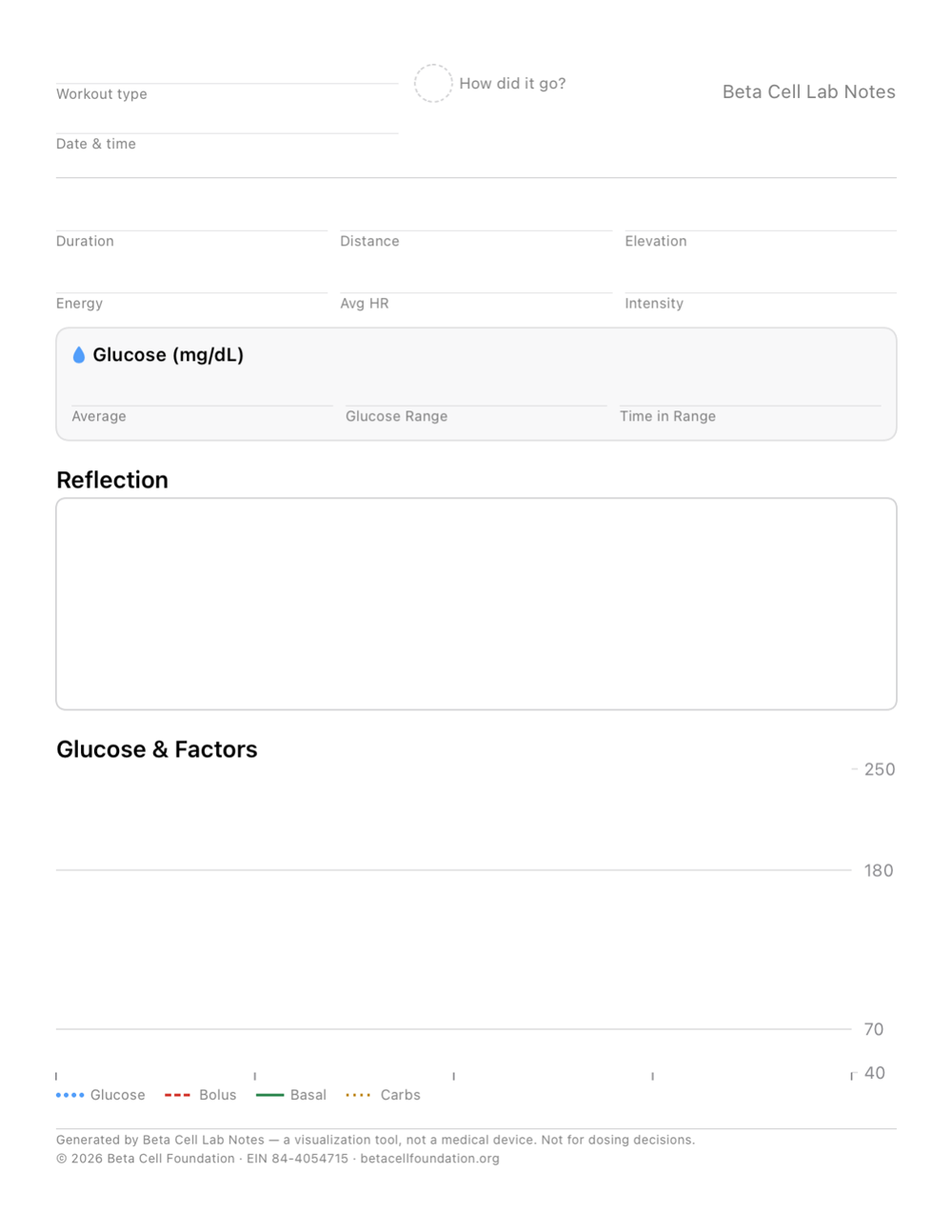
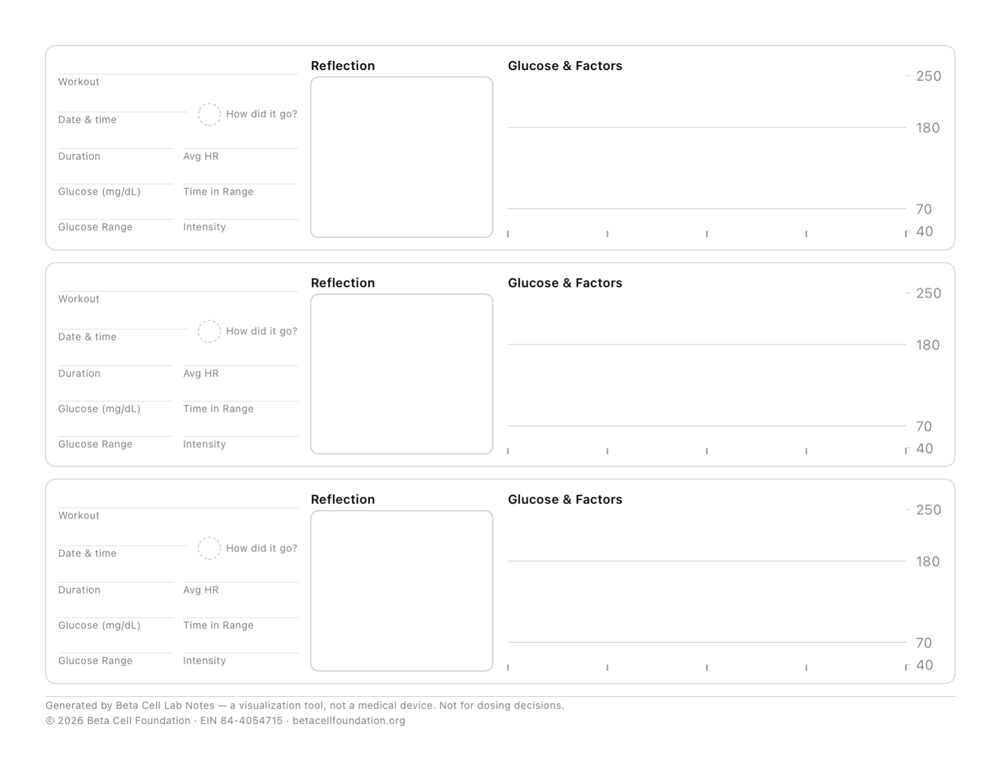
Exercise Program.
How movement actually affects your blood sugar, and how to plan for it without fear. Free for people with T1D and their caregivers, in print and online, when it launches.
We train the people who teach.
Most organizations teaching diabetes have more demand than hours and no instructional designer on staff. Beta Cell Foundation works with health networks, clinics, camps, and nonprofits to add that capacity to what they already do: scaffolded sequencing, active practice, and materials built to develop capability over time.
Every organization we work with reaches people we never could directly. If yours teaches people about diabetes and you’d like instructional design behind it, here is what that involves.
Sources
- Chrvala CA, Sherr D, Lipman RD. Diabetes self-management education for adults with type 2 diabetes mellitus: a systematic review of the effect on glycemic control. Patient Educ Couns. 2016;99(6):926–943. doi.org
- Norris SL, Lau J, Smith SJ, et al. Self-management education for adults with type 2 diabetes: a meta-analysis of the effect on glycemic control. Diabetes Care. 2002;25(7):1159–1171. doi.org
- DAFNE Study Group. Training in flexible, intensive insulin management to enable dietary freedom in people with type 1 diabetes (DAFNE): randomised controlled trial. BMJ. 2002;325(7367):746. doi.org
- Wood D, Bruner JS, Ross G. The role of tutoring in problem solving. J Child Psychol Psychiatry. 1976;17(2):89–100. doi.org
- Freeman S, Eddy SL, McDonough M, et al. Active learning increases student performance in science, engineering, and mathematics. Proc Natl Acad Sci U S A. 2014;111(23):8410–8415. doi.org
- Knowles MS. Andragogy: adult learning theory in perspective. Community Coll Rev. 1978;5(3):9–20. doi.org
- Cepeda NJ, Pashler H, Vul E, et al. Distributed practice in verbal recall tasks: a review and quantitative synthesis. Psychol Bull. 2006;132(3):354–380. doi.org
- Dunlosky J, Rawson KA, Marsh EJ, et al. Improving students’ learning with effective learning techniques. Psychol Sci Public Interest. 2013;14(1):4–58. doi.org