
Coming soon
 Type 1 Simulator
What is it like to have type 1 diabetes? Take over a simulated body for 1, 3, or 7 days, and find out.
Free, with no paywalls or ads.
For the people around someone with type 1.
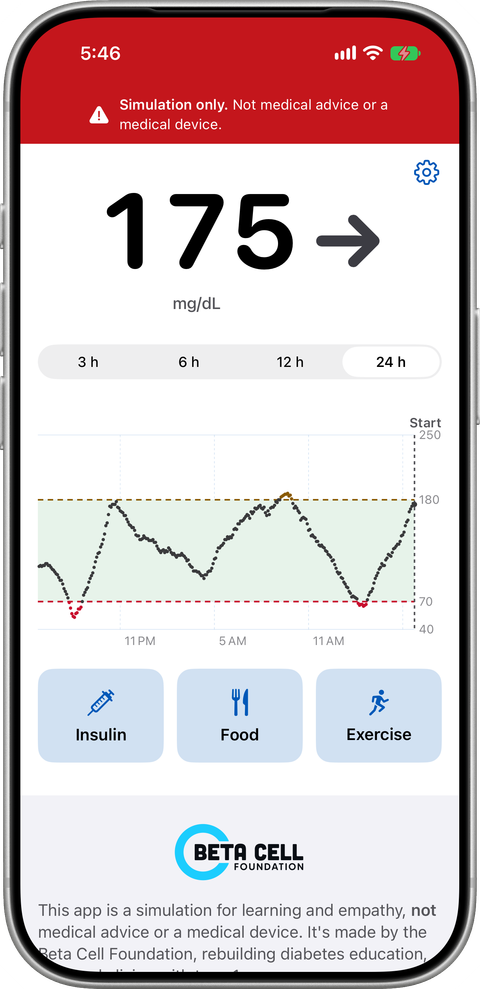
Type 1 Simulator gives you a simulated body that no longer makes insulin. Like a real glucose sensor, the app shows your blood sugar every 5 minutes, day and night, and alerts you when you go low or high. Keeping it in range is up to you.
- Friends and family: partners, parents, and coworkers of someone with type 1.
- Schools and teams: teachers, coaches, and school nurses.
- Learners: students, clinicians, and anyone curious about life with type 1.
You make the decisions.
Every dose, meal, and workout is your call, the way it is for someone living with type 1.
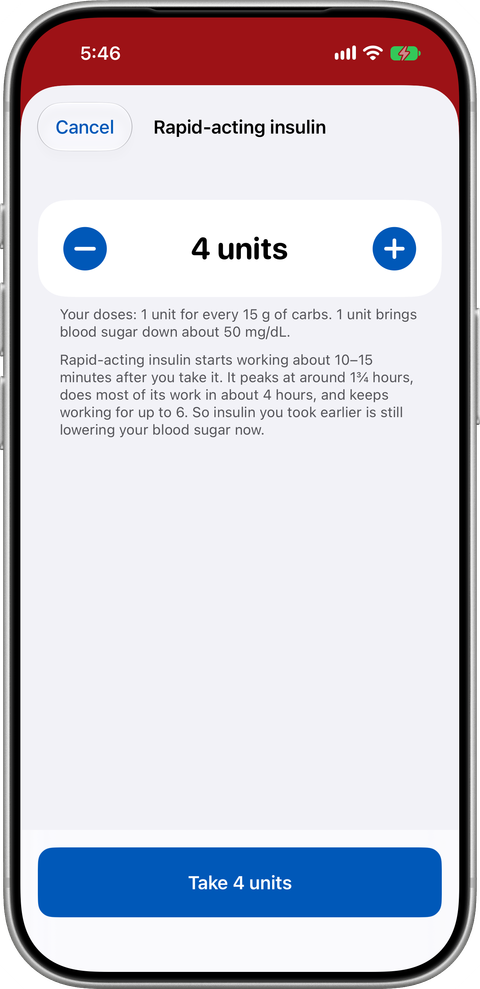
- Take insulin: rapid-acting insulin for food and for highs. Your long-acting insulin is taken for you every morning.
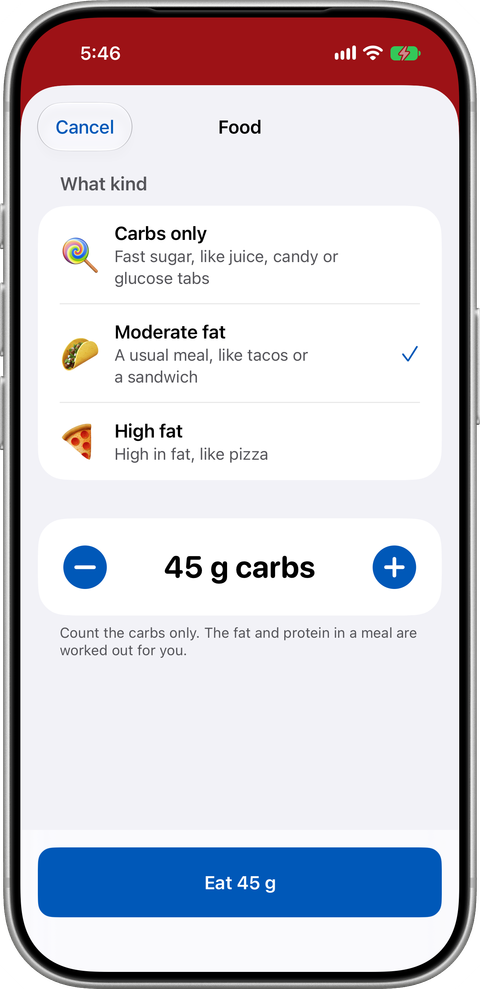
- Eat: count the carbs and choose the kind of meal. Juice acts fast, a usual meal takes hours, and pizza can keep blood sugar rising late into the evening.
- Move: log a walk, a run, or intervals. Exercise causes blood sugar to fall for hours afterwards, and sometimes in the middle of the night.
It doesn’t stop.
The simulation runs in real time for the days you choose, whether the app is open or not. Your blood sugar keeps moving while you work, eat dinner, and sleep.
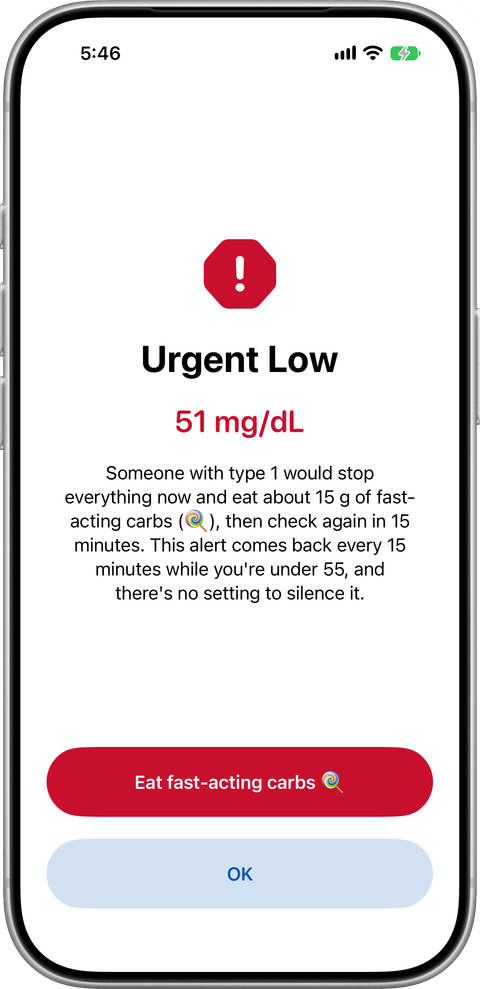
- Low and high alerts arrive like a real sensor’s, including at 3 am.
- An urgent low alert can’t be silenced until you treat it.
- On Apple Watch, your reading sits on your wrist, and you can log insulin, food, and exercise from there.
Even when you do everything right.
Real bodies aren’t calculators. Mornings bring a hormone rise you didn’t ask for. Insulin works differently at breakfast than at lunch, and differently from one day to the next. Carbs are a guess.
The simulation is built so that a careful person still sees highs and lows, as people with type 1 do every day.
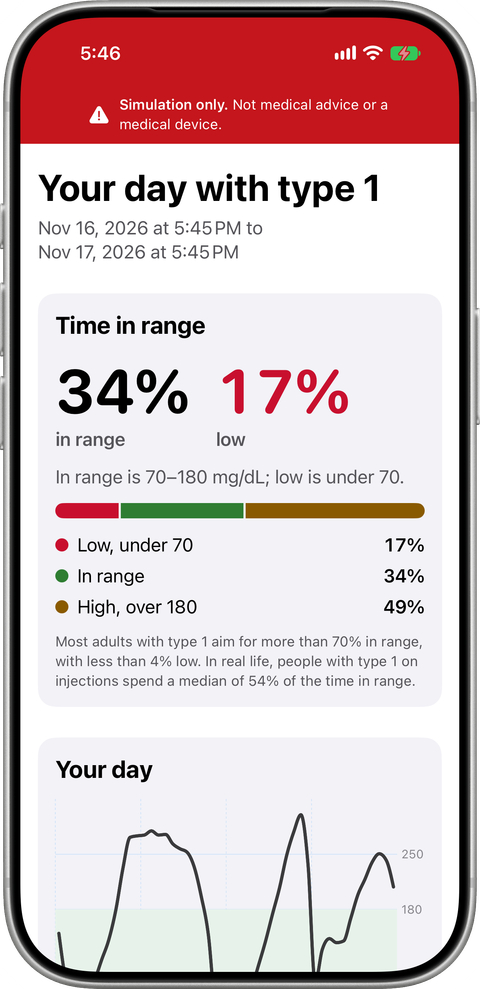
See how you did.
At the end you’ll see your time in range, your time low, your average day, and everything it took: every dose, meal, workout, and alert, including the ones at night.
Then compare it with real life. People with type 1 make these decisions every day, for the rest of their lives, with no end screen.
Built on the same research as our simulators.
The simulated body runs on the same engine as the Beta Cell Foundation’s online simulators. It is built from published research on insulin, food, exercise, and the morning rise, and every source is listed in the app.
Type 1 Simulator is for learning and empathy. It is not medical advice or a medical device, and its numbers are not anyone’s real blood sugar. Never use it to make decisions about real insulin, food, or exercise.